“Le pedimos a un grupo de productores, enólogos y protagonistas de la industria vitivinícola chilena que respondieran, en primera persona, sobre sus sueños, el vino que mejor representa al país y cómo deberíamos estar en el largo plazo.
– por Alejandro Jiménez
Derek Mossman Knapp.
COFUNDADOR DE GARAGE WINE CO.
Una frase
Más vinos chilenos pensados para el sabor, con voluntad y propósito, no para el mercado ni el supermercado.
Un sueño
Mi sueño es que los orígenes dentro de Chile por fin se diferenciaran, como en VIGNO, y se apoyaran mutuamente.
Que los vinos de viejos viñedos / old vines se conviertan en una categoría propiamente tal.
Los chilenos acomodados empezarán a beber más allá del Maipo, más allá de los siete mil pesos, y más allá del cabernet y la carmenère, como lo hace el resto del mundo.
Los chilenos se darán cuenta de que, si uno quiere disfrutar el vino, no hace falta ser un experto: basta con juntar a amigos y familia en una mesa grande y abrir más de una botella a la vez, más seguido. Y se acordarán de invitar a los más jóvenes a que se alejen de las pantallas y se sumen a esa mesa.
Menos barrica, menos esnobismo, más respeto por el trabajo de la tierra.
Durante el último recambio generacional los precios bajaron para que los volúmenes pudieran subir. Con el próximo recambio generacional, la calidad y la identidad subirán para que los precios puedan seguirlas.
El discurso del rubro finalmente habrá cambiado a ser algo distinto -o más- que lo meramente técnico.
El vino que mejor representa al país
Cru Truquilemu, D.O. Empedrado, valle del Maule. Cariñena y syrah en mezcla de campo. Un caballo oscuro de pocas palabras.
Necesita tiempo, pero envejece regio. Elegante. Largo en boca. Fresco. Y absolutamente desatado cuando se junta con una mesa feliz.
¿Cómo deberíamos estar en el largo plazo?
Creo que la industria siempre ha insistido en que el vino es uno solo -el industrial y el más fino- y que no hay ninguna razón por la que un productor industrial no pueda hacer también el mejor vino de Chile. Encuentro eso absurdo, y siempre lo ha sido.
Creo que por fin vamos a empezar a dividirnos un poco: vamos a tener vino industrial y granel por un lado, y otro grupo de precio más alto, más sano, más independiente, con intención. No solo los pequeños; también algunos grandes van a decidir hacer vino fino a una escala menor, pero distinguible del resto. Eso les va a dar más prominencia con sus clientes.
Hubo un cambio generacional en el que fuimos hacia abajo: los hijos de los pioneros, en lugar de tomar lo que les dio la familia y hacerlo más fino, pero fueron a buscar el granel. Creo que la próxima generación va a ir hacia el otro lado y lo va a llevar más arriba. Uno no espera que Jaguar o Ford hagan un Ferrari; Ferrari hace Ferrari, hace la categoría más sexy. El mejor auto del mundo no lo hace la empresa más grande de autos del mundo. En Chile tenemos la idea de que sí.
Uno es una suerte de gusto personal de su creador que se enamoró de Itata y quiso ampliar el registro de su marca. El otro, es una mirada más relajada de un proyecto que fijó su residencia en los viñedos viejos del Maule.
Cuando Marco Puyo armó su marca personal “Dagaz”, todas las fichas estaban puestas en el campo que había adquirido años antes en la zona de Pumanque, Colchagua. Pero a poco andar, se dejó enamorar por las parras viejas del Itata que había mirado desde lejos en sus tiempos en San Pedro. “Hice algunos ensayos, y cuando ya había echado a andar Dagaz puse en la balanza no solo la mirada de empresario sino también el enólogo que quería hacer un vino de cinsault con todas esas cualidades: fresco, jugoso, fácil de tomar”, reconoce.
Esta etiqueta se une al portafolio “Parcelas de Granito” que habla de la vocación del enólogo por buscar perfiles de suelo que acompañen la matriz de Pumanque, con un viñedo que está en la zona de Guarilihue a 20 kilómetros en línea recta al mar y con parras que tienen 44 años en promedio. “Hemos crecido harto con esta etiqueta, y mi percepción es que el público agradece este estilo de vinos de taninos vibrantes y suaves a la vez”.
Pilar Miranda, socia y enóloga de Garage Wine Co., reconoce que fue dándose de manera natural una búsqueda menos intelectual y más relajada de la marca para ofrecer vinos de más fácil acceso como este Revival cabernet sauvignon. “Luego de un pedido del extranjero, nos dimos cuenta que podíamos ofrecer vinos de precios más atractivos para el público sin perder ni un poco de nuestra esencia por eso me gusta definir este cabernet como un vino con carácter, pero que se entiende solo”.
Revival proviene de viñedos viejos de cabernet sauvignon injertado sobre raíces de país de más de 100 años, y en algunas parcelas hay mezcla con pequeños porcentajes de país y malbec. “Nos gustó la idea de crecer con vinos de pueblo, y sumarnos a estas etiquetas que han salido de cabernet sauvignon del Maule. El nuestro quiere tener el estilo propio de Garage, sin perder la complejidad de la cepa”, afirma la enóloga.
One of my greatest pleasures is introducing friends to wines they didn’t know they were missing, especially when I think they’re going to love them. Liza, one of my more adventurous pals, is always game for my suggestions. Most recently, we spent an entire dinner at Txikito, a Basque spot in Chelsea, drinking dry Sherry—her first time tasting what I believe is one of the world’s greatest food wines. And she did indeed fall for her Amontillado that night.
The time before that, we were at Nuyores in the West Village, where, after a round of well-made Pisco Sours, I asked the server for a glass of País. Unsurprisingly, Liza’s interest was piqued, and she asked me for a taste. One sip of Roberto Henríquez País Franco and she lit up. Lots of oohing and aahing. And the wine even surprised me a little bit. Most versions I’ve had have veered more rustic (though still delicious), but this was something else entirely, with an unexpected level of refinement and flavor on the palate.
If País isn’t a grape you know well, you’re not alone. Long associated with simple, unmemorable Chilean wines, it spent decades overshadowed by more fashionable international varieties. But that’s changing. Today, thanks to a new generation of thoughtful producers and a growing market for fresher, lighter reds, this delightful red wine is finally getting the recognition it deserves.
Five Things to Know About País
1. It’s One of the Oldest Grapes in the Americas
Brought to the Americas by Spanish missionaries in the 16th century, País became the first widely planted European grape in places like Chile and Argentina, helping establish wine culture across the continent.
2. It Goes by Different Names Around the World
País is part of a grape family that traveled widely with the Spanish empire. It’s known as Criolla Chica in Argentina, Mission in North America, and Listán Negro in Spain’s Canary Islands. Same grape, different identities, and each shaped by where it landed. Today, some of the best examples come not just from Chile, but also from old bush vines in the Canaries, where Listán Negro has developed its own personality.
3. It’s Not the Chilean Red You Expect
Forget heavy, oaky reds. País is typically light-bodied, bright, and fruit-driven, with red berry notes, a touch of earth, and often a slightly rustic edge. It’s low in tannin, naturally high in acidity, and usually has a relatively low alcohol content, in the 12–13% ABV range, well below many fuller-bodied reds. It drinks more like Gamay or Pinot Noir than Cabernet, and a slight chill only makes it better.
4. Out of Favor, Now it’s Back
For centuries, País was everywhere in Chile. But as varieties like Cabernet Sauvignon, Merlot, and Carménère took over, it lost its cachet and became associated with bulk wine. Now, with drinkers looking for lighter, more refreshing reds, it’s making a well-deserved comeback.
5. A New Generation of Producers Is Rewriting País
What’s driving the revival is a new mindset. Today’s best producers are treating País with care: earlier picking, gentle extraction, and little to no oak, all in pursuit of freshness and balance.
Six Wines to Know About
Louis-Antoine Luyt El Mismo País – One of the earliest champions of País, helping reframe the grape as something worth taking seriously. This wine is fresh and light-bodied, with earthy and fruity notes, and is perfect with a picnic salad spread. ($22)
Garage Wine Co.País 215 BC Ferment 2022 – Small-lot, dry-farmed wines from Maule that show depth and structure. This one offers loads of ripe fruit flavors and round tannins, without rusticity. This País grows on granitic rock in a coastal, mountainous area. ($21)
Miguel Torres Chile, La Causa País 2022 & Estelado Brut Rosé – A major player in País’s revival, through its own bottlings as well as projects like La Causa, which sources grapes from small, independent growers in the Itata Valley. La Causa País is fragrant, light-bodied, and juicy with soft, rustic tannins. The sparkling Estelado País rosé shows the grape’s versatility with lively bubbles and hints of fresh red berries and citrus. ($25 & $23)
Roberto Henríquez País Franco 2022 – Roberto Henríquez is highly regarded for reviving ancestral winemaking traditions in the Bío Bío and Itata valleys, producing natural, low-intervention wines from 100- to 200-year-old vines. The winery’s País Franco (the one Liza and I fell in love with) has a translucent ruby-red color that was striking in the glass, followed by a burst of fragrant aromas and a vivid, textured, complex palate. ($27)
Pedro ParraVinista País 2023 – Legendary winemaker Pedro Parra has brought a new vision to the Chilean wine industry by searching for quality terroirs and developing new plantings throughout the country. The Wine Advocate calls this wine “Outstanding. It’s the finest Vinista to date.” ($24)
These aren’t rustic bulk wines anymore. They’re thoughtful, site-driven expressions of a grape that’s finally being taken seriously again. País wines are an excellent value for what’s in the glass—perfect for adventurous tasters like Liza, but really anyone curious enough to try something new.
The year‑in‑review of from harvest mornings in Sazual to late night tastings in Stockholm.
Our journey through 2025
It was a year of recognition:
Pilar was honoured with the Premio al Mérito Vitivinícola from the Chilean Agronomist–Oenologists ANIAE, [lifetime achievement award from her peers] recognising her trajectory, wines, and most importantly her work with Garage reviving old vines with small growers. The award was significant for a small winery and underlines what Garage has always been about farming old vines with purpose.
A lighter harvest but still lots of heavy lifting,
And there was more recognition:
Cariñena Empedrado Cru Truquilemu 2021 was the No. 2 wine for JamesSuckling in its Top 100 for 2025, highlighting [their words] : the depth, energy and character of old-vine Cariñena from Maule. Not bad for a small, family, farm‑focused winery, to rub shoulders with the country’s biggest names and grandest cellars on a list that champions the cutting edge of meticulous vineyard work, precise winemaking and patient élevage in the cellar— [their words again] ¨that can stand on any world stage¨.
And lots of travels to market
This year Ignacio joined Derek spreading the good word and pouring the wines on the road. We did Master Classes in Holland, Belgium Sweden & UK, poured at Wine Fairs in Sao Paolo, Mexico City, Lima, Toronto, Sonoma, Lodi, Stockholm and Halstad, and finally began a proper distribution in Chile as far South as Torres del Paine.
[5 travelling shots x varios Ignacio somm in Truqui & Iggy in Mex City Fair, lima torres . . . [6 Derek Sweden, Toronto, CA, London Belgium Amsterdam …]
And farm work — there is no rest for the wicked
And lots of visitors Come in working clothes we like to say Many joined us on the farms and with the team and a country lunch to follow with Ester & Christian: Paul-Lobenberg, Merel-Mexico, Aaaron-Peru, Carlos-Colombia, Jim-UK, Al-USA and many others . . .
And we spoke at conferences like the Old Vine Conference in California In late 2025, Derek travelled to the Old Vine Conference in California, joining a global gathering of old‑vine advocates, writers and growers committed to preserving heritage vineyards. Old Vines farmed with purpose remains our ethos and Derek joined many other old-vine champions on panels and in tastings and discussions: Rosa Kruger, Teegan Passalacqua, Sarah Abbott, MW Alder Yarrow, Stuart Spencer, Greg Jones, Morgan Twain MW & Chris, Scott Stewart, Peter Granoff MS, Michelle Bouffard, Robert Joseph, Jancis Robinson, Paul Draper . . .
Terrific wines, visits, company and ideas. And now the work will continue better aligned with old vines around the world…
And at La Cav Mesa de Cata Awards MoVI won the Jose Guilisasti Award
This October 18th, Pilar was awarded the Merito Vitivinicola prize from the Asociacion Nacional de Ingenieros Agronomos Enologos. It is the lifetime achievement award chosen and awarded by the membership – a tradition that goes back more than fifty years.
Some great stories of her professional beginnings, the founding of MoVI, Vigno & Almaule and her steering of Garage into what it is today, told by many…
El Directorio ANIAE 2025 tiene el honor de reconocer a la Sra. Pilar Miranda Avendaño (N° de registro 620) con el Premio al Mérito Vitivinícola, distinción que resalta a quienes han destacado de manera especial a lo largo de su vida profesional por su aporte a la vitivinicultura del país.
Ingeniera Agrónoma – Enóloga de la Universidad de Chile, Pilar ha desarrollado una amplia y versátil trayectoria profesional, que abarca el trabajo en reconocidas viñas, la docencia universitaria, la dirección enológica y la creación de proyectos innovadores con reconocimiento nacional e internacional, como enóloga y gerenta general de Garage Wine Company @garagewineco . En 2024, fue distinguida como la Mejor Enóloga de Chile por la Guía de Vinos de Alistair Cooper MW, consolidando su liderazgo en la industria.
En el ámbito gremial, ha estado estrechamente ligada a la Asociación Nacional de Ingenieros Agrónomos Enólogos, colaborando en directorios anteriores y participando activamente en el fortalecimiento de nuestra comunidad. Asimismo, ha sido parte fundamental en el impulso de importantes asociaciones, siendo socia fundadora y directora de MOVI (Movimiento de Viñateros Independientes, 2010), VIGNO (Viñadores de Carignan, 2011) y ALMAULE (creada el año 2021), asociaciones que han contribuido a renovar la imagen de Chile en el mundo, mostrando su diversidad, autenticidad y riqueza enológica.
Más allá de sus logros profesionales, Pilar se ha distinguido por su ética, calidad humana y compromiso con pequeños productores, contribuyendo al revivir de viñedos patrimoniales y a la promoción de la diversidad enológica de Chile.
La ceremonia de premiación se realizará el 18 de octubre, en el marco de nuestra Asamblea Anual 2025, ocasión en la que invitamos a todos quienes deseen a acompañarnos en este reconocimiento.
¡Felicitaciones, Pilar, por este merecido reconocimiento a tu trayectoria, compromiso gremial y aporte invaluable a la vitivinicultura chilena!
It is an honour to be so considered in Alistair Cooper´s guide again this year. We have always felt consistency is a virtue, not only year on year, but in this case across the portfolio— and indeed across the various critics who taste with a different perspective and point of view. Thank you.
Medals
Best Red Wine, Best Cabernet Sauvignon, Best Cabernet Franc, Best Cariñena and Best Maule Valley— for a second Cariñena from Truqui.
Perhaps it is not so new any more to have the wines well received, but with success it is important to keep one´s feet planted firmly on the ground and to say thank you to our entire team of farmers. It has been many years in the making, years of incessant experimentation, dozens of trials separating smaller bits to compare and contrast, that helped us to make a series of small decisions that built on each other, year after year, until twenty + years later the sustained curiosity and perseverance generated small incremental improvements the sum of whose parts leads to recognition like this. It has always been a labour of love working with these gorgeous old vineyards, still under appreciated but no longer forgotten, whose only sins were to be too far from a paved road, too small to fill a truck and impossible to mechanise.
Garage is proud to have had a hand in reviving some worthy underdogs: a Cabernet from Cauquenes front and centre and once again our favorite less-than-considered grape: Cariñena in a slowly becoming more considered place: Empedrado.
Raise a glass with us of thanks for old vines @ouroldvines and small wine – small by design / on purpose, for balance and longevity, tension over extraccion, and for dark horses in such illustrious company. Congratulations to you all: @almavivawinery @donmelchorwine @mateticvineyards @altair.wine @vinosmontes @MontesFolly
Pilar and I would like to recognise the entire Garage team on the farms and in the cellar: Cristian & Ester, Jose and clan Medel: Alejo, Ana & Estla, Daniel Flores, Cotaco, Haroldo & Miguelito, Raúl & Alvaro, Don Franco & Edmundo, Tia Angelica & Tia Maria, Señora Luz, Elsa, Don Hugo Pereira & Don Julio Moraga, Carlos Varas, Armando, Segundo Opazo, Jorge, Juan, Francisco, Valeska y Diego, Javier . . . . . . and our co-conspirateurs who support us from Jorge and Javier with Regenerative Agriculture and Alejandro & Felipe with analysis.
[Music heard rising in volume drowning out the words]
Thank you Alistair @alistaircoopermw ! and @acmwbycatador
A couple of weeks ago, I wrote about VIGNO, a unique movement created in Chile to celebrate and spotlight old-vine, dry-farmed Carignan in Chile’s Maule Valley.
That is, it was unique—until about four years ago, when six of the players involved in VIGNO decided the same thing needed to be done for the old-vine País of Maule’s Secano Interior. And so ALMAULE was born.
Interestingly, while the old-vine Carignan in Maule dates to the middle of the 20th century, there are many País vineyards in the region well over a century old. These scraggly, own-rooted vines have made beautifully delicious wines for generations, mostly consumed by locals or sold to massive wineries where the grapes traditionally disappeared into mass-market regional blends.
While the philosophy behind VIGNO leans toward a more serious, fine-wine approach to Carignan, the philosophy at ALMAULE seems quite the opposite. País has long been a wine of the people, and ALMAULE aims to celebrate that by putting the grape back where it used to be—not on a pedestal, but on dinner tables, picnic blankets, beach towels, tailgates, and afternoon plaza benches, where it was once ubiquitous.
“ALMAULE is a tribute to the cultural richness of Secano and the resilient capacity of winemaking that, since 1548, gave rise to Chile’s most emblematic industry and symbol in the world.”
— From the founders
The Dry Land
Maule’s Secano Interior region boasts a remarkable 19,000 hectares of vines. No one knows exactly how much of that is País, but nearly everyone in the region grows at least some País—it’s the oldest grape variety in the country.
“Not everyone has old-vine Carignan,” says Derek Mossman Knapp, one of the founding members of both VIGNO and ALMAULE, “but almost everyone has some País, and the thinking is that this really should be what our young people in Chile are learning to drink with instead of mixed drinks or beer. This is about easy drinking.”
The ALMAULE group, like VIGNO, has defined a set of production standards that its members must follow in order to use the ALMAULE designation.
ALMAULE wines must:
Come from the subregions of Talca, Pencahue, San Clemente, San Rafael, San Javier, Villa Alegre, Parral, Linares, and Cauquenes
Contain at least 90% País grown on head-trained vines over 30 years of age
Have an alcohol content of at least 12.5% and residual sugar of less than 5 g/l
Wines must also pass a blind tasting panel evaluation to ensure that they are “fresh, rustic, clear, clean, and juicy red wine reflective of the vintage, where varietal characteristics predominate.”
País, of course, has become something of a darling in the natural wine scene over the past 15 years, and ALMAULE seems determined to set itself apart from those wines—partly by hearkening back to the fresh and uncomplicated wines that were traditionally made from the grape.
Even more so than VIGNO, the folks behind ALMAULE seem focused on the local Chilean market. Despite similar beginnings, VIGNO eventually became much more influential outside of Chile than within it. Whether the same thing will happen to ALMAULE remains to be seen—especially given País’s popularity in trendy wine bars and restaurants these days.
“There isn’t a wine list in Brooklyn without a País on it,” jokes Knapp. “And if they don’t have it, they’ll guiltily tell you they’re out and offer to go get a bottle from their sister restaurant down the street.”
That’s a promising signal of potential, but Knapp is much more pleased with the reception so far within Chile. “When you take these [ALMAULE] wines out to an event, or something social in Chile, people pick it up by the glass and swig it. VIGNO is still more of a hand-sell—a ‘with food’ wine. You take ALMAULE out, and it seems people are content to drink this instead of beer.”
País for the People
There are plenty of underrated grapes in the world, but País ranks high on the list of those dismissed by the modern wine establishment. I’ve written about this phenomenon before, and tried to make the case that while there may indeed have been an era when País wines from both California and Chile were a little wild and rustic, that was more a reflection of the effort and care put into those wines—not the intrinsic quality of the grape itself.
País, in the right hands, can be made into a delightful wine, full of energy, freshness, fruit, and juicy acidity. Light in color and body, the grape lends itself perfectly to today’s fascination with chillable reds and other “smashable” genres.
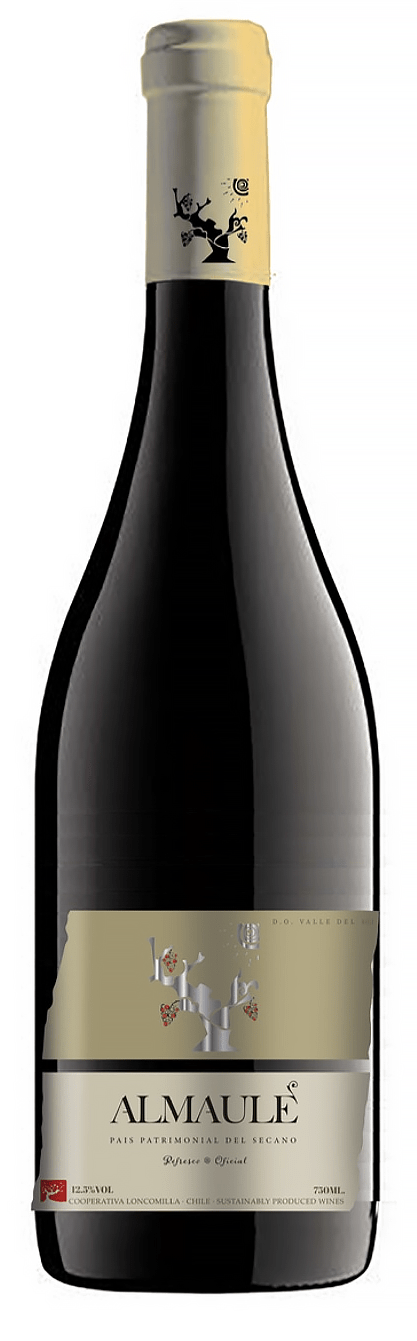
The ALMAULE producers were kind enough to send me some bottles to show what they’re up to, and I thoroughly enjoyed the experience. From the vaunted name of Baron Philippe de Rothschild to the humble local cooperative winery in Loncomilla, the wines have a cheerful deliciousness that’s impossible to ignore.
The name ALMAULE is a portmanteau of Maule and alma, which means “soul.” It’s a fitting label for wines that manage to bridge nearly 500 years of winemaking history and still feel right at home in the modern age.
We all need to be drinking more País.
Tasting Notes
Unfortunately, these wines are not yet available in the US (or most other places in the world, for that matter), as they are relatively new to market and made in small quantities. But keep an eye out for them over the next year or two. They’re worth waiting for.
2023 Balduzzi Almaule País, Maule Valley, Chile Light to medium ruby in the glass with some blood-red highlights, this wine smells of cherries, candied pomegranate, and flowers. In the mouth, juicy and bright acidity makes sour cherry, mulberry, and raspberry flavors zingy and mouthwatering as fine, powdery tannins coat the mouth and stiffen with time. Aromatic and long, with a lovely perfume. 12.5% alcohol. Score: around 9.
2024 Baron Philippe de Rothschild Almaule – Terra Sagrada País, Maule Valley, Chile Medium garnet in the glass with purple highlights, this wine smells of boysenberries and black raspberries. In the mouth, juicy, almost saline flavors of unripe blackberry and black raspberries mix with sour cherry and a hint of dried herbs. Wonderfully mouthwatering with the faintest gauzy tannins adding a little texture. Made from a single 3.7ha vineyard. 12.5% alcohol. Certified vegan. Score: around 9.
2023 Entre Rosas & Parras Almaule País, Maule Valley, Chile Medium garnet in the glass, this wine smells of boysenberries and blueberries. In the mouth, there’s a light petillance on the tongue as boysenberry and grape soda flavors are wrapped in a fleecy blanket of tannins. Tastes like it was made with carbonic maceration. A bit overly fruity for my taste, but with good acidity. Alcohol unknown, as the wine is missing a back label. Score: between 8 and 8.5.
2023 Erasmo Almaule País, Secano Interior, San Javier, Maule Valley, Chile Light garnet in the glass, this wine smells of road dust, warm (clean) dog fur, and strawberries. In the mouth, juicy berry flavors are bright with citrus peel notes as excellent acidity makes the mouth water. Lightly grippy tannins coat the mouth, and a hint of herbal bitterness lingers in the finish. 12.5% alcohol. Score: around 8.5.
2022 Garage Wine Co. Almaule País, Maule Valley, Chile Light to medium ruby in the glass with some garnet highlights, this wine smells of dusty roads, chaparral, and red berries. In the mouth, the wine has a faintly earthy and animal note to it, like wet dog fur, along with strawberry and raspberry fruit shot through with lightly bitter dried herbs. Powdery tannins coat the mouth and stiffen slightly in the finish. 12.5% alcohol. Score: around 8.5.
2023 Gillmore Almaule País, Maule Valley, Chile Light garnet in the glass, this wine smells of strawberries, raspberries, and underbrush. In the mouth, bright, juicy strawberry and raspberry flavors are shot through with a lightly bitter herbal flavor and hints of sawdust. Excellent acidity and the faintest of tannins. 12.5% alcohol. Closed with a screwcap. Score: between 8.5 and 9.
2023 Las Valetas Almaule País, Maule Valley, Chile Medium garnet in the glass, this wine smells of cherries, raspberries, and wildflowers. In the mouth, powdery tannins coat the mouth as wonderfully juicy strawberry and cherry flavors make the mouth water, thanks to excellent acidity. The tannins settle like a gauze on the palate but then gradually stiffen, giving this wine a slow grip. Alcohol unknown. Score: between 8.5 and 9.
2023 Cooperativa Loncomilla Almaule País, Loncomilla, Maule Valley, Chile Pale ruby in the glass, looking very much like a rosé, this wine smells of strawberries and wildflowers. In the mouth, silky flavors of berries and flowers have a bright juiciness to them with no trace of bitterness. This is just bright, aromatically sweet fruit and all the more charming for it. Excellent acidity and a near absence of tannins. Very delicious. 12.5% alcohol. Score: around 9.
¨ Garage takes top honours with the latest report from Joaquin Hidalgo @hidalgovino with VINOUS @vinousmedia Note: we share the honour, rubbing shoulders with Andrea & Charles at Clos Apalta @ClosApalta .
Pilar and I would like to recognise the entire Garage team on the farms and in the cellar: Cristian & Ester, Jose and clan Medel: Alejo, Ana & Estla, Daniel Flores, Cotaco, Haroldo & Miguelito, Raúl & Alvaro, Don Franco & Edmundo, Tia Angelica & Tia Maria, Señora Luz, Elsa, Don Hugo Pereira & Don Julio Moraga, Carlos Varas, Armando, Segundo Opazo, Jorge, Juan, Francisco, Pete, Valeska y Diego, Javier . . . . . . and our co-conspirateurs who support us from Jorge with Regenerative Agriculture and Alejandro & Felipe with analysis.
It has been more than 20+ years of hard work, tradition elbow to elbow with science, but a labour of love working with these gorgeous old vineyards, still under appreciated but no longer forgotten, whose only sins were to be: too far from a paved road, too small to fill a truck and impossible to mechanise.
We are proud to have had a hand in reviving some to be worthy underdogs, in this case one made from a less-than-considered grape: Cariñena in an un-considered place: Empedrado. Let´s here it for old vines and small wine – small by design / on purpose, and for balance and longevity, tension over extraccion, and . . .
[Music heard rising in volume drowning out the words] thank you Vinous!
ESPAÑOL :
Garage obtiene el máximo honor con el último informe de Joaquín Hidalgo @hidalgovino en VINOUS @vinousmedia. Nota: compartimos este honor, codeándonos con Clos Apalta @ClosApalta.
Pilar y yo queremos reconocer a todo el equipo de Garage en los campos y en bodega: Cristian & Ester, José y el clan Medel: Alejo, Ana & Estla, Daniel Flores, Cotaco, Haroldo & Miguelito, Raúl & Álvaro, Don Franco & Edmundo, Tía Angélica & Tía María, Señora Luz, Elsa, Don Hugo Pereira & Don Julio Moraga, Carlos Varas, Armando, Segundo Opazo, Jorge, Juan, Francisco, Pete, Valeska y Diego, Javier . . . . . . y nuestros co-conspiradores que nos apoyan: Jorge con Agricultura Regenerativa y Alejandro & Felipe con análisis.
Han sido más de 20 años de trabajo, tradición codo a codo con ciencia, pero un trabajo de amor cultivando estos hermosos viñedos antiguos, aún subvalorados pero ya no olvidados, cuyos únicos pecados fueron: estar demasiado lejos de un camino pavimentado, ser demasiado pequeños para llenar un camión e imposibles de mecanizar.Estamos orgullosos de haber tenido un rol en revivir algunos para ser dignos caballos oscuros, en este caso uno hecho de una cepa poco considerada: Cariñena en un lugar poco conocido por vino: Empedrado.
¡Brindemos por las vides viejas y el viñatero pequeño – pequeño por diseño / a propósito, y por equilibrio y longevidad, tensión sobre extracción, y . . . [Se escucha música subiendo de volumen ahogando las palabras] ¡gracias Vinous!
VINOUS Media, Joaquín Hidalgo, June 2025
2022 Cariñena Field Blend Cru
Producer: Garage Wine Co.
Color: Red
The 2022 Cariñena Field Blend Cru from Empedrado, Maule, is based on Carignan with Syrah and other grapes. The nose reveals red fruit, herbs, ash, raspberry and delicate pomegranate. Silky and agile, driven by elevated acidity and palate intensity, it finishes with layered complexity. The combination of supple texture and vibrant flavor make this unique.
2022 Vigno
Producer: Garage Wine Co.
Release Price: $45
Color: Red
Drinking Window: 2025 – 2040
The 2022 Vigno is a field blend of mostly Carignan and Monastrell from Truquilemu, Maule. It was harvested in passes, fermented with partially lignified whole clusters and aged briefly in foudres. This is herbal and stemmy on the nose, with bright red cherry notes. It’s dry and silky with moderately fine tannins and grippy edges. The 2022 is long and energetic, where the interplay of texture and juiciness is so appealing.
2022 Cariñena Truquilemu – Lot 137
Producer: Garage Wine Co.
Release Price: $45
Color: Red
Drinking Window: 2025 – 2040
The 2022 Cariñena Truquilemu – Lot 137 hails from Empedrado in Maule. Fresh and expressive, it delivers delicate aromas of cherry and pomegranate, accented by subtle herbal notes. The palate is dry, intense and juicy, with a silky texture and persistent flavor. Though somewhat linear, it offers a compelling purity of expression and a soft, velvety feel. Grippy tannins add structure, while the cool-climate character shapes a long, flavorful finish. This is a Cariñena that achieves clear varietal expression with depth and nuance, beyond mere fruit and ripeness.
2022 Cabernet Sauvignon Renacido Lote 134
Producer: Garage Wine Co.
Color: Red
Drinking Window: 2025 – 2040
The 2022 Cabernet Sauvignon Renacido Lote 134 comes from Cauquenes, Maule. This expressive red opens with aromas of red fruit, redcurrant, blackberry and raspberry, underscored by a hint of ash. Subtle balsamic and camphor notes add complexity to the mix. Lean in body, with compact tannins and a core of richness, it shows finely woven structure and moderate intensity. Still in development, this will benefit from at least two more years in bottle to reach its full refinement. For now, power leads the way, but elegance is close behind. The freshness of the vintage lends charm and lift.
2022 Cabernet Franc
Producer: Garage Wine Co.
Color: Red
Drinking Window: 2025 – 2040
The 2022 Cabernet Franc from Las Higueras, Maule, opens with ash, delicate herbs and mint, balanced by subtle pyrazines and a cassis backdrop. Dry, juicy and finely textured, this shows compact structure and clear fruit definition. Reminiscent of the Loire in expression, it finishes with a mentholated note and delivers impressive complexity and tension.
2021 The Ploughmen
Producer: Garage Wine Co.
Color: Red
Drinking Window: 2025 – 2040
The 2021 The Ploughmen is a blend of Garnacha, Cariñena and Monastrell from Sauzal, Maule. It shows a liqueur-like profile, with black fruit, fig, cherry, rose and licorice aromas. Dry and structured, the active tannins and elevated freshness give this juiciness and presence, with mature fruit notes.
2023 Cabernet Sauvignon Revival
Producer: Garage Wine Co.
Color: Red
Drinking Window: 2025 – 2035
The 2023 Cabernet Sauvignon Revival comes from Maule. With cassis and blackberry aromas, plus subtle menthol and camphor, this is a dry, broad red with a hint of orange zest on the palate. Flavorful and slightly warm in tone, it finishes with depth and regional character.